
Signs Your Toyota Prius Hybrid Battery Is Failing | What to Watch For
Signs Your Toyota Prius Hybrid Battery Needs Replacement
The Toyota Prius is celebrated for its fuel efficiency, reliability, and hybrid technology. At the heart of this performance is the hybrid battery, a key component that powers the electric motor, reduces fuel usage, and supports regenerative braking.
While these batteries are built to last, they aren’t immune to wear. Understanding early signs of hybrid battery failure can save you from unexpected breakdowns, high repair costs, or even safety issues on the road.
How Long Does a Prius Hybrid Battery Last?
On average, Toyota Prius hybrid batteries last between 8 to 10 years, or around 100,000 to 150,000 miles, depending on usage, climate, and maintenance. Recognizing the warning signs early helps you avoid being stranded or paying more for avoidable repairs.
How the Toyota Prius Hybrid Battery Works
The Prius uses a hybrid powertrain consisting of:
- A hybrid battery pack (usually NiMH or Lithium-ion, depending on model year),
- An electric motor, and
- A gasoline engine working in sync.
Unlike the 12V auxiliary battery (which powers lights, radio, and accessories), the hybrid battery stores energy from braking and engine activity, then delivers it during acceleration or low-speed driving.
As this battery degrades, its ability to hold a charge and support the system drops; directly impacting performance and fuel economy.
Top Signs Your Prius Hybrid Battery Needs Replacement
Decreased Fuel Efficiency
If you notice a sudden drop in miles per gallon (MPG), it could indicate your hybrid battery isn’t assisting the gasoline engine as it should.
- A healthy battery reduces the engine load and improves fuel economy.
- When the battery begins failing, the engine compensates, increasing fuel consumption.
Watch for: A consistent MPG drop of 5–10+ miles over a few weeks.
Fluctuating State of Charge (SOC)
A common warning sign is an erratic state of charge display on your dash:
- One moment the battery appears full, then quickly drops to low.
- Then it may jump back to full within minutes.
This kind of behavior is not normal and typically signals an imbalance among battery cells, often due to age or internal failure.
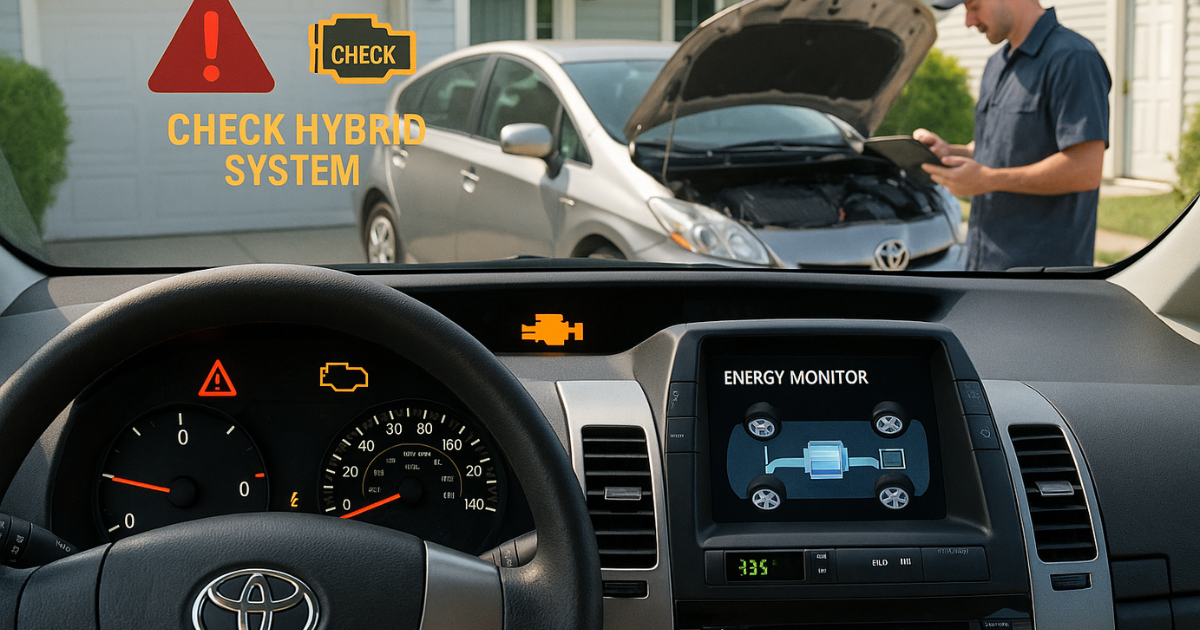
Check the Hybrid System Warning Light
Modern Prius models display warning messages such as:
- Check the Hybrid System
- Illuminated triangle warning light or check engine light
These alerts may point to a variety of issues, but hybrid battery failure is a common culprit.
What to do: Use an OBD-II scanner or visit a hybrid specialist to retrieve specific diagnostic trouble codes (DTCs) before proceeding with repairs.
Unusual Engine Behavior
Another symptom of battery failure is when the engine runs more frequently or starts/stops abruptly:
- You may hear the engine turn on more often, even at low speeds.
- The seamless transition between electric and gas modes becomes rough.
This occurs because the battery can no longer provide sufficient energy, forcing the gas engine to work harder.
Battery Not Holding Charge.

If your battery seems to drain quickly; or dies after being fully charged; it likely has lost its capacity.
Typical signs:
- Battery SOC drops overnight or after brief periods of inactivity.
- Shorter electric-only driving range (for Prius Plug-in or Prime models).
- Required jump starts even though the 12V battery is fine.
You can test battery capacity using a hybrid battery health diagnostic, available at most hybrid service centers.
Strange Noises from the Battery Cooling Fan
The battery cooling fan helps regulate temperature, especially during heavy use. When a battery is stressed or failing:
- The fan may run constantly or sound unusually loud.
- It may activate even when the car isn’t under load.
This can indicate that the battery modules are overheating or that dust buildup is forcing the system to overcompensate.
Pro Tip: A dirty or overactive fan is often a symptom, not a cause, of battery issues.
When Should You Replace the Battery?
You don’t need to wait for complete failure to act. Most experts recommend inspecting or testing your Prius battery once it’s:
- Over 8 years old
- Has more than 100,000 miles
Battery health is also affected by:
- Climate (extreme heat or cold shortens lifespan)
- Driving habits (frequent short trips reduce regeneration efficiency)
- Maintenance (keeping the cooling fan clean helps)
Cost of Replacing a Failing Prius Battery
The cost of replacement varies depending on battery type, model year, and source.
Estimated Costs:
|
Battery Type |
Price Range |
|
$1,200 – $1,800 |
|
|
New OEM Battery |
$2,000 – $3,000+ |
|
Aftermarket Options |
$1,400 – $2,500 |
|
Labor (Typical) |
$300 – $600 |
For most Prius owners, refurbished batteries offer a cost-effective solution with warranties up to 3 years.
Visit our Toyota Prius battery pricing page to explore your options and get a quote.
What to Do If You Notice These Signs

If your Prius is showing one or more of the signs listed above, here’s what you should do:
Run a Diagnostic Scan
Use a hybrid-capable scanner or visit a Toyota-certified technician or hybrid repair shop.
Check Warranty Coverage
Toyota hybrid batteries are often covered for 8 years/100,000 miles, or 10 years/150,000 miles in states following CARB regulations (like California).
Consider Your Options
- Repair: Replacing individual weak cells (less common, temporary solution)
- Recondition: Rebalancing and restoring existing cells
- Replace: With refurbished, new, or aftermarket battery packs
At Hybrid CPR, we help you weigh these options based on your vehicle’s condition and your budget.
Preventative Tips to Prolong Battery Life
To maximize the lifespan of your Prius hybrid battery:
- Drive Regularly: Long idle periods shorten battery life. Aim for weekly drives.
- Keep the Battery Fan Clean: Have the fan inspected and cleaned annually.
- Avoid Deep Discharges: Don’t run the battery down to 0%. Hybrid systems usually manage this automatically, but be mindful of heavy use.
Also, store the vehicle in shaded areas or garages when possible to avoid heat damage.
Frequently Asked Questions
Can a Prius run without a hybrid battery?
No. While the 12V system may power accessories, the vehicle requires a functioning hybrid battery to drive properly.
What’s the average price of a Toyota Prius battery?
Depending on the model and battery type, prices range from $1,200 to over $3,000.
See our Prius battery pricing guide here.
Refurbished vs New Prius Batteries: Which is better?
- Refurbished: Lower upfront cost, typically comes with a 1–3 year warranty.
- New OEM: Higher price, but longer lifespan and full Toyota warranty.
Compare your options here.
Conclusion
The hybrid battery is essential to your Prius’s performance, and catching early signs of failure can help you avoid larger problems.
Recap: Signs Your Prius Battery May Be Failing
- Sudden MPG drop
- Battery gauge jumping frequently
- “Check Hybrid System” alerts
- Engine running excessively
- Battery not holding charge
- Loud battery cooling fan
By staying alert and proactive, you can avoid being stranded and save money on major repairs. If you’re experiencing any of these symptoms or simply want peace of mind, schedule a diagnostic today or contact us for affordable battery replacement options.